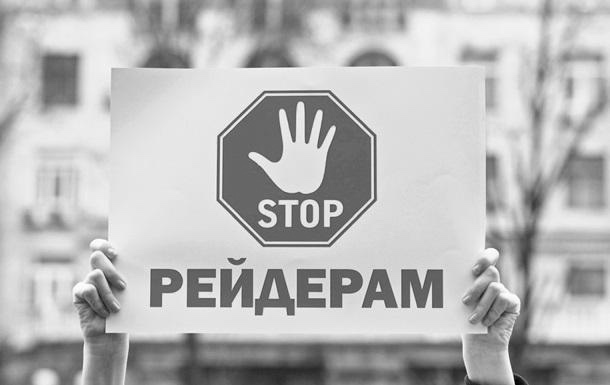
Unlawful actions of the State Environmental Inspection causing businesses to lose hundreds of thousands of dollars
Unlawful actions of the State Environmental Inspection causing businesses to lose hundreds of thousands of dollars ― page 4
Co-founder and investment risk advisor at S&P Investment Risk Management Agency, Nataliia Osadcha, shared her opinion on the actions of the State Environmental Inspection using the case of the port of “Pivdennyi” and previous scandals involving cargo delays in Ukrainian ports in her column for Hubs:
Recently, representatives of the business community have increasingly discussed cases of illegal actions and abuse of authority by the State Environmental Inspection of Ukraine. Despite the fact that such cases are often supported by facts, official statements about these precedents rarely appear in the press.
Last year, our company encountered a case of unlawful actions by the State Environmental Inspection of the North-Western Black Sea region against one of our clients, who was the owner of a cargo shipment. In this case, the mentioned government agency was behind the creation of a “creative” scheme to detain a vessel with cargo. S&P Investment Risk Management Agency dedicated an article to this conflict, in which we detailed how these environmental officials manipulate concepts and “find” various reasons to delay vessels.
Recently, another case involving illegal actions by inspection officers surfaced in the media. To our surprise, after reviewing the case documentation, we discovered traces of the same “creativity” from the State Environmental Inspection of the North-Western Black Sea region. According to Mykola Shchurykov, Deputy Director of PJSC “Odesa Port Plant,” the essence of the recent conflict lies in the deliberate violation of current legislation by environmental officials.
After examining the facts and documents provided by Mykola Shchurykov, it becomes evident that the Environmental Inspection was once again involved in the downtime of vessels—this time in the port of “Pivdennyi.” This incident affected five vessels loaded with ammonia, whose owners suffered enormous losses totaling approximately $424,000.
The question arises: how do environmental officials manage to create conditions for vessel delays? The answer is simple: they use a fairly basic scheme, which, in their opinion, “covers up” all illegal actions. This scheme was used both in our case and in the subsequent one (albeit with some nuances, as the vessels carried different types of cargo). This government agency manipulates two completely different concepts and, under various pretexts, “discovers” violations of environmental legislation.
In our case, the alleged violation was the imaginary discharge of polluted ballast water. In the second case, it was the failure to coordinate the cargo loading plan with the environmental inspection. According to current legislation, when a violation of environmental laws is detected, inspectors are required to issue a protocol for an administrative offense, impose an administrative fine, and that should be the end of it. However, the Environmental Inspection freely “interprets” its powers.
Referring to an administrative violation (in our case), inspectors marked in the documents that the vessel had not passed environmental control. In the second case (with “Odesa Port Plant”), they outright refused to accept the documents. Do you think a vessel can pass customs control if it has a stamp stating “Radiological control of import/export prohibited” (as in our case) or has not passed environmental control (as in the case of the ammonia vessels in the port of “Pivdennyi”)? The answer is obvious—of course not.
In our case, inspectors stamped the documents, effectively detaining the vessel on Thursday evening (right before the weekend). It took us three days to release the vessel, but by then, the total delay exceeded five days. The shipowner suffered losses of $100,000 (not counting the losses of the cargo owners). In the case of the port of “Pivdennyi,” the financial losses were significantly higher.
The most striking part is that even as they release vessels with substantial financial losses, the inspection officials and their leadership continue to deny any wrongdoing, citing the “uncertainty” of current legislation. The inspectors, whose actions cost businesses hundreds of thousands of dollars, continue to work without consequences.
There are hundreds of similar cases involving the State Environmental Inspection of Ukraine, but only a few ever receive public attention. Until environmental officials prioritize lawful business practices over bureaucratic manipulation, such situations will persist.
The cases described above demonstrate that businesses in Ukraine are still not fully prepared to defend their rights within the legal framework. The market still lacks enough consultants who can help companies navigate crises using proper, legal, and ethical tools.
However, the latest case offers a glimmer of hope that a new wave of businesses is emerging—companies willing to openly assert their rights and act through legal means. This includes holding officials accountable for their “creative” abuses of power and defending their positions in accordance with the law. This shift benefits both society and the state as a whole. These companies are shaping the right “rules of the game.” Only by changing the existing business environment can Ukraine attract major foreign investors.
OPINION: WHY BIG EUROPEAN COMPANIES ARE AFRAID TO DO BUSINESS IN UKRAINE?
OPINION: WHY BIG EUROPEAN COMPANIES ARE AFRAID TO DO BUSINESS IN UKRAINE? ― page 4
Investments of new large foreign players contribute to strengthening the country’s economy and help to reach a stable level of development. While in the eyes of potential investors, Ukraine does not belong to the category of investment-attractive countries. What is the problem and why such large foreign giants like Starbucks and IKEA have not yet entered the domestic market? Mykola Siutkin, managing partner of S&P Investment Risk Management Agency explains.
Now large foreign companies, which for a certain period were represented in our market, stop their business and leave Ukraine. According to open sources, over 27 foreign companies from various industries have left this field over the last three years: Honda, Peacocks, Mexx, River Island, Praktiker, Logitech, and others.
It may take years for potential investor to make a decision about entering Ukrainian market. For example, the European “giant” IKEA has considered this step since 2005, despite economically attractive indicators and clear advantages from doing business in the domestic market.
“Dark” rules for business
The main problem of Ukraine lies in the entangled rules of doing business, namely corruption at all levels. If a foreign investor leads a transparent business, it does not mean that sooner or later the company faces problems, sometimes even criminal ones. So it turns out that business “in white” in Ukraine can be compared with military actions, and not every investor is ready to keep such defense.
Fear Factor
The decision to gain a foothold in the Ukrainian market is not based solely on financial indicators or state guarantees. Investors carefully study the market, analyze the behavior of large players and look at real cases. If, for example, they encounter cases of initiation of criminal proceedings or raider seizure of another large company, it becomes a decisive factor. The company must feel safe, have guarantees of keeping property rights and immunity from unreasonable criminal prosecution.
High Level Risks
Acquisition of real estate in Ukraine and / or entering into partnership with the Ukrainian side – high level risks. Even experienced specialists are not always able to minimize them. If you put an attractive price on one bowl of scales and possible loss of an object in a couple of years on another one , which factor prevails? Often, large companies are not willing to risk their assets and a positive reputation because of an unsuccessful attempt to conduct business in Ukraine. Therefore, they opt for franchising. This type of risk refers to the category of risks with a business partner. Level of significance is lower than the previous one, but they can jeopardize the rights of the investor to transfer rights to use the objects of intellectual property, commercial experience and business reputation to the Ukrainian side.
In order for a foreign company would be able to conduct a successful business partnership in Ukraine, it is also necessary at the zero stage carefully consider the formation of correct rules of the game and to calculate all possible risks in advance.
«S&P Investment Risk Management Agency» owns the exclusive copyright of the information in this article. The author has the sole right to control the use of this material. It means the prohibition of using this information without our consent. The term “information” means texts, comments, photos, images, and other materials. Any use of the information or any part of this article without the written permission of the author is prohibited. The term “use” means copying, adaptation, re-writing, modifications, etc. In the case the irregularities are detected, the author has the right to copyright protection in accordance with the procedure established in Article 50-53 of the Law of Ukraine «On Copyright and Related Rights».
RAIDERS IN THE STEPPES OF UKRAINE: WHY THE SEIZURES OF ENTERPRISES HAPPEN
RAIDERS IN THE STEPPES OF UKRAINE: WHY THE SEIZURES OF ENTERPRISES HAPPEN ― page 4
The problem of illegal seizure of an enterprise – raiding – has become relevant again. The heyday of raiding in Ukraine was in the early year two thousand and some years after, but the beginning of 2010s was relatively calm. During this period, the only raiders in the country were the “family” of the former Ukrainian president Viktor Yanukovich and his closest collaborators. They were not going to observe any formalities, so the prosecutor’s office, courts, the Security Service and the Ministry of Internal Affairs, which were completely under control of the Donetsk clan, nullified the possibility of owners to defend their business. After the Revolution of Virtue, the situation has somewhat improved, but the problem of forcible seizure of control and illegal transfer of property rights remains relevant. The good news is that now at least we have an opportunity try to defend business interests.
Nataliia Osadcha, co-founder of S&P Investment Risk Management Agency, told RAU how to hedge business and avoid attempts of raider capture and what to do if the attack has already begun
— How often and why do raider seizures take place in Ukraine? What is the reason for this?
— Today, raiding in Ukraine, alas, has become the norm and almost an integral part of doing business. Especially this problem affects the sphere of retail and real estate. Only in last few years dozens seizures of commercial real estate have been committed, you can remember the situation with the Lviv SEC Victoria Gardens and the Kyiv SEC SkyMall – ed. Some of them were so serious that they have become some markers of Ukraine as an investment-risky state. Analyzing the current situation in the country, I do not see the preconditions for reducing raider seizures in the near future.
The reasons that contributed to emergence and development of this phenomenon, we can distinguish
- Unstable political situation in Ukraine, the frequent change of high-ranking officials, leaders of law enforcement agencies and so on;
- Corruption at all levels, including law enforcement agencies and courts;
- Raider attacks execution involving state and law enforcement agencies;
- Absence of a real mechanism and practice of bringing raiders to criminal liability for raiding actions;
- Lack of a culture to lead honest business. An important factor in this aspect is the unwillingness of businessmen conducting business in Ukraine to play fair.
— What mistakes do Ukrainian companies make more often in such situations?
— Each raider capture is unique. Two equally organized and realized seizures are extremely rare. It’s like a battle, the scenario of which changes depending on the tactics of the enemy. Nevertheless, proceeding from our practice, it is possible to single out general trends and characteristics that can cause a raider capture.
The first thing that is important to remember is that not all enterprises become the object of raider seizure. It can be caused by the following circumstances:
The ownership of a large real estate object and / or objects of intellectual property, as well as business in any form that brings a stable income;
The company’s mistakes / circumstances, which may serve as the reason for the seizure. This is what are the prompts for raiders to attack, identifying the company with an easy prey.
Any raider capture is designed for speed. The attack is interesting to customers only under the condition of the fastest execution, first of all, from the financial point of view. The primary goal of the raiders is to gain complete physical control over the object, the secondary goal is to obtain financial control. In this situation, the raider does not care any more how long the conflict lasts, because he does not use his personal resources, but the means of captured object.
“Victim” of the attack will be “exsanguinated” and it will have to invest in this “war” both personal and borrowed funds. So, the confrontation can last for years, during which the raider will continue to receive income from the captured object. In general, protection from a serious raider attack is a long and financially expensive process. One of our defense case against the seizure of a large property in Kyiv lasted five years. The object was returned under our client control, but his financial losses proved to be enormous. Not every company can financially sustain such a battle. However, our case was an exception.
As practice shows, if a raider intrudes into an object and receives control over financial flows, it performs manipulations, because of which it is almost impossible to eliminate it from this object. Do not forget that large raider seizures are carried out with the active participation of law enforcement and / or government agencies, which significantly complicates attempts to return the illegally seized facility.
A vivid example is the sensational case of Arricano. Leading developer of shopping centers; for more than five years he has been trying to regain control of the shopping mall Sky Mall. Despite the fact that Arricano has at its disposal numerous decisions of the London Commercial Arbitration Court, it is practically impossible to execute them at the moment in Ukraine. Particularly difficult for the process is that officials are involved in the conflict at a sufficiently high level.
— How a retailer can protect his business?
— If the business project is executed in partnership, even at the “zero stage” it is worthwhile carefully consider the formation of the correct rules of the game. It is necessary to calculate immediately and c build correctly a system of checks and balances that makes it impossible or unprofitable to betray and / or capture business by one of the partners. According to statistics, one of the most common types of raiding is that one which begins with a corporate conflict.
Therefore, our main advice is this: even at the stage of discussing a business project, approach the issue of investing fundamentally. This will help the investor significantly minimize reputational and financial losses in the future.
— Prevention: what is better to be avoided?
— First: ignoring / not appealing the results of inspections of regulatory bodies that established the fact of illegal actions of the enterprise where the object was registered.
The second. Ignoring the institution of a criminal case against a counterparty who sold the real estate object and / or the official / body that made the decision to sell the property. Issuance of originals of legal documents to the investigation.
Third. Issuance of debt securities with a maturity date “upon presentation” by the enterprise where the property is registered.
Fourth. Primary privatization of the real estate object and / or redemption of the object from state authorities / local authorities without implementing a subsequent scheme to minimize legal risks.
Fifth. Non-renewal of title documents and / or statutory documents: the name of the enterprise has not been changed, a new certificate of ownership has not been received, technical characteristics of the object have not been changed after the reconstruction, etc.
Sixth. Transfer of a part of the corporate rights of the enterprise where the object is registered to third parties: directors, chairman of the board, etc.
Seventh. Distribution of shares between business partners on the basis of “60/40” or “51/49” in the event that the head of the enterprise has moved to the side of the participant owning the 51st% of the statutory fund.
Eighth. Purchase and sale of corporate rights of the enterprise where the real estate object (bought out from the state) was registered, without proper assessment of legal risks. Lack of procedures for minimizing risks.
Ninth. Exclusively legal mistakes / inaccuracies in the conduct of business, especially when concluding a transaction and / or after its conclusion.
«S&P Investment Risk Management Agency» owns the exclusive copyright of the information in this article. The author has the sole right to control the use of this material. It means the prohibition of using this information without our consent. The term “information” means texts, comments, photos, images, and other materials. Any use of the information or any part of this article without the written permission of the author is prohibited. The term “use” means copying, adaptation, re-writing, modifications, etc. In the case the irregularities are detected, the author has the right to copyright protection in accordance with the procedure established in Article 50-53 of the Law of Ukraine «On Copyright and Related Rights».
S&P Investment Risk Management Agency and Switzerland: A Year of Successful Partnership Results
S&P Investment Risk Management Agency and Switzerland: A Year of Successful Partnership Results ― page 4
S&P Investment Risk Management Agency Expands Cooperation with Foreign Partners and Official European Representations in Ukraine.
The year 2017 was marked by the slogan: “Switzerland-Ukraine – Friendly Nations and Reliable Business Allies.” Throughout the year, S&P Investment Risk Management Agency actively collaborated with the diplomatic representation of the Swiss Embassy in Ukraine and the Swiss business community.
As part of this fruitful cooperation, the agency initiated a series of events aimed at providing advisory support to representatives of major Swiss companies operating in Ukraine. The primary goal of S&P Investment Risk Management Agency was to help foreign investors strengthen their companies’ positions in the Ukrainian market and avoid potential unlawful actions by government authorities. Consequently, these events addressed pressing topics such as business operations in Ukraine, investment protection, potential conflict scenarios with tax authorities, Swiss values of reliability and their possible application in Ukraine, and much more.
The end of the year was marked by a significant event in cooperation with the Swiss side. S&P Investment Risk Management Agency contributed to the creation of a special edition of LDaily, an informational and analytical business publication with a legal focus. The agency became an official partner of the SPECIALIZED SWISS EDITION – a special issue dedicated to the 25th anniversary of diplomatic relations between Switzerland and Ukraine.
One of the key materials in the issue, focused on the peculiarities of Swiss business operations in Ukraine, was an exclusive interview with the Ambassador Extraordinary and Plenipotentiary of Switzerland to Ukraine, Mr. Guillaume Scheurer. In this candid conversation, Mr. Scheurer shared his impressions from two years of working at the embassy, discussed urgent matters, reflected on Polish-Swiss relations, ways to enhance Ukraine’s political image and investment attractiveness, Ukrainian and Swiss values, the Ukrainian people, beautiful places in the country, and other fascinating insights.
Creative State Environmental Inspection
Creative State Environmental Inspection ― page 4
Domestic regulatory authorities are inventing new ways to create problems for businesses—sometimes in quite creative ways.
Let me tell you about a recent precedent involving the interaction between a major cargo owner and the State Environmental Inspection of Ukraine.
Initial Scenario
Imagine you are the owner of a large cargo— in this case, corn grain. Your counterparty on another continent is already expecting delivery.
According to current legislation, this type of cargo is not subject to environmental control at customs if the checkpoints are equipped with automated systems for monitoring the movement of radioactive substances and nuclear materials. Radiological control of such goods is only conducted if they emit radiation while passing through the scanning frame.
If your cargo successfully passes through the automated control system at the port—the “frame”—it means your goods are not radioactive and, therefore, cannot be subject to claims, at least on that basis. Your cargo is on the vessel, and you are calmly waiting for its departure.
“Radioactive Cargo”
Suddenly, the inspection service marks the shipping documents (manifest) with a note indicating negative results from the radiological control, stamping it with “Radiological control import/export prohibited.” As a result, customs refuses to process the shipment.
The cargo owner is baffled—how did a ban on export due to radiological control failure appear on the manifest when the cargo had already passed inspection during loading? On top of that, the shipowner starts demanding compensation for downtime losses, and counterparties send formal complaints due to delays in corn delivery.
Only after the cargo owner officially inquired with the State Environmental Inspection about the grounds for the radiological control failure stamp did the situation begin to clear up. It turned out that the State Environmental Inspection had no actual claims against the cargo. Instead, the export ban stamp was placed because the vessel carrying the goods allegedly violated environmental protection laws. According to the regulatory authority, the ship had polluted the country’s territorial waters. In short: “The inspection has no claims against the cargo, but since there are environmental concerns regarding the vessel, we placed this stamp.”
This issue was handled as a dispute between the shipowner and the cargo owner, but it did nothing to resolve the main problem—the vessel remained stuck in port, while both the cargo owner and the shipowner suffered enormous losses.
One must give credit to the “ingenuity” of the environmental inspection. In order to detain the vessel, they skillfully manipulated terminology, ensuring that customs had no legal right to release the cargo from Ukraine.
“Creative” Manipulation of Concepts
In Ukraine, the State Environmental Inspection conducts several types of control. The first is radiological control, which was formally carried out in our case and directly concerned the cargo. The second is environmental control of the vessel, which has no relation to the radiological inspection of the cargo. Failure to pass this control should in no way result in a “Radiological control import/export prohibited” stamp in the corn owner’s manifest.
Under current legislation, the State Environmental Inspection has the right to check territorial and maritime waters for compliance with permissible pollution concentration standards. Such an inspection is only justified if, during the discharge of isolated ballast from a vessel, visible floating particles or traces of oil, oil-containing substances, or other pollutants appear in the discharge area.
In our case, the environmental inspection conducted a ballast discharge inspection near our vessel without any visible cause, seemingly to block cargo shipment. Following this, in the presence of a port representative, inspectors compiled an act of water sample collection. Notably, the port representative stated in the act that no visible oil particles or traces were observed, meaning the document itself was baseless and unlawful.
Based on this act, officials drafted a protocol with measurements of water composition and characteristics, claiming that the collected samples exceeded permissible limits for iron and petroleum products. The legality of this inspection and the presence of actual pollution are highly questionable, and ultimately, only a court can decide on this matter.
However, the fact remains that the act was issued, and nothing could be done about it in the short term. Yet, this document merely confirmed a violation of environmental laws by the vessel. This should have only resulted in an administrative violation protocol and an environmental damage assessment—not a cargo export ban or a restrictive stamp.
It was clear that the State Environmental Inspection’s goal was not to compensate the state for environmental damage but to detain the vessel and impose financial losses on all parties involved. As for other, more obvious but unspoken motives—everyone could read between the lines.
Understanding that time was our main adversary, we carefully considered which tools would allow us to resolve the situation as quickly as possible. And we found one. I can’t disclose the details, but I will say this—we did not go to court, as that would have been inefficient. Any legal proceedings would have dragged the conflict out for months.
Although we managed to get the ship released in three days, even this short delay resulted in huge losses for our client. It is highly doubtful that customs officials were unaware of this “Operation Barbarossa” plan, and by refusing to process the cargo, they were simply “following orders.” Everything pointed to coordinated actions among the involved agencies.
Unfortunately, we must acknowledge that the system of regulatory authorities has not changed—it still operates against businesses. Personal interests continue to take precedence over the country’s economic development and investment potential.
S&P Investment Risk Management Agency supports FAANG BUSINESS BUSINESS
S&P Investment Risk Management Agency supports FAANG BUSINESS BUSINESS ― page 4
S&P Investment Risk Management Agency Becomes the General Partner of a Masterclass by One of the World’s Top Business Gurus
With the participation and support of S&P Investment Risk Management Agency, an exclusive masterclass by Kjell Nordström — a renowned Swedish economist, author, and one of the world’s leading business thinkers—is taking place today in Kyiv.

For over 25 years, Kjell Nordström has been working with international businesses, advising multinational corporations and government institutions on globalization, corporate strategy, and business development. He was among the first global business gurus to identify the emergence of the era of creativity in business.
His book, Funky Business: Talent Makes Capital Dance, written in the early 2000s, predicted many aspects of modern global economic development. The book became an international bestseller, earning Nordström the reputation of a business futurist.

In Kyiv, Kjell Nordström will share insights with business owners and executives on how to succeed in the ultramodern world (read: the world of technology).
“If you acknowledge that the future has already arrived and want to grow in the next 5-10 years, you need the right strategy and the skill to think ‘from the future.’ To succeed in the ultramodern world, you must follow FAANG (Facebook, Amazon, Apple, Netflix, Google). The goal of today’s masterclass is to provide you with a deep understanding of the modern business environment—how massive technological changes impact companies—and to highlight the emerging system of new values,” the speaker noted.
Opening the event, Mykola Syutkin, founder of S&P Investment Risk Management Agency, emphasized in his welcome speech that such events clearly highlight the huge gap between the business environment in Ukraine and the direction in which global business is moving.

“Business in Ukraine is focused on survival, not creation. Sometimes, I feel like our country is still living in the times of Ancient Greece, where local aristocrats, declaring themselves descendants of Heracles, claimed a divine right to indulgence and violence. Today, modern Ukrainian ‘Heraclids’ in government offices and law enforcement agencies continue to devour businesses and intimidate what entrepreneurs are building in this country.
However, the sheer number of Ukrainian entrepreneurs, company executives, and progressive thinkers gathered here today proves that Ukrainian business is interested in global trends and strategies—and is ready to set them in this country.
As long as we continue to come together, as long as renowned speakers visit us, and as long as Ukrainian businesses choose growth over survival, Ukraine has every chance of being integrated into the global innovation landscape—where there is no place for ‘Heraclids’ at all.” — Mykola Syutkin

The organizer of Kjell Nordström’s master class in Kyiv was KA Group Agency.
How to minimize conflicts with the state – master class from S&P Investment Risk Management Agency experts
How to minimize conflicts with the state – master class from S&P Investment Risk Management Agency experts ― page 4
On November 3, the founders of the S&P Investment Risk Management Agency conducted the author’s master class for the representatives of the Swiss business community in Ukraine. S&P Investment Risk Management Agency experts told representatives of Swiss companies about scenarios of potential conflicts with tax bodies, as well as how to minimize the risks of doing business in our country.

A separate block of the master class was devoted to various nuances of conflicts with the law enforcement agencies. Experts of the S&P Investment Risk Management Agency identified the most common tools which law enforcement agencies often use to manipulate business.


According to S&P Investment Risk Management Agency experts, it is impossible to fully insure against a conflict to a law-abiding enterprise, but it is possible to minimize damage if certain conditions are observed.


“The successful outcome of the conflict 100% depends on the pre-completed ” homework “. To achieve this is entirely within the power of any business, it is enough to conduct a purposeful preparatory work. Having completed the “homework”, the company will not only be able to recover quickly after a conflict with the security forces, but also acquire an “inconvenient” image, which will reduce the number of “visits” by law enforcement agencies` officers in the future, “the speakers of the S&P Investment Risk Management Agency summarized.


«S&P Investment Risk Management Agency» owns the exclusive copyright of the information in this article. The author has the sole right to control the use of this material. It means the prohibition of using this information without our consent. The term “information” means texts, comments, photos, images, and other materials. Any use of the information or any part of this article without the written permission of the author is prohibited. The term “use” means copying, adaptation, re-writing, modifications, etc. In the case the irregularities are detected, the author has the right to copyright protection in accordance with the procedure established in Article 50-53 of the Law of Ukraine «On Copyright and Related Rights».
Get Business: Insights from Mykola Syutkin for Young Entrepreneurs
Get Business: Insights from Mykola Syutkin for Young Entrepreneurs ― page 4
On October 20, Mykola Syutkin spoke to representatives of small and medium-sized businesses at the first Get Business Festival. The founder and CEO of S&P Investment Risk Management Agency shared insights with entrepreneurs about modern corporate raiding and ways to counteract it. He also discussed how to avoid critical mistakes in the early stages of business development that could later lead to its loss.
Mykola Syutkin emphasized that 90% of the mistakes entrepreneurs make when starting a business are legal in nature. These mistakes create opportunities for interested parties to seize businesses quickly.
“Today’s corporate raiders are no longer just targeting large enterprises and assets. Raiding in Ukraine has now extended to small businesses. If you are developing a micro, small, or medium-sized enterprise and generating stable income, believe me, you are already being considered as a target. The only way to protect yourself from raiders is to avoid making mistakes when launching your business and to ‘play by the rules’ throughout your operations,” he stated in his speech.
The S&P Investment Risk Management Agency founder outlined the key mistakes entrepreneurs make both at the start and during business operations. These include:
- Launching a business without obtaining all necessary permits,
- Relying on verbal agreements instead of formal contracts,
- A lack of legal awareness, and more.
According to Mykola Syutkin, one of the main reasons these mistakes occur is the absence of a legal advisor who can explain their potential consequences. Understanding that many startup entrepreneurs cannot afford expensive lawyers or asset protection consultants, S&P Investment Risk Management Agency invested in the creation of a specialized legal platform, Lawyer.ua.

Taxes, police, investments: what Ukrainian CEO talked about at breakfast
Taxes, police, investments: what Ukrainian CEO talked about at breakfast ― page 4
Yesterday, Kyiv Post once again brought together executives from the largest Ukrainian and international companies for the twelfth Kyiv Post CEO Breakfast. As always, S&P Investment Risk Management Agency and DHL partnered with the event.
The main topic of discussion was taxes and their administration. The discussion was moderated by Natalia Osadcha, co-founder of S&P Investment Risk Management Agency.

Присутствующий на встрече с бизнесменами и.о. Главы Государственной фискальной службы Украины Мирослав Продан рассказал об изменениях, которые были сделаны в части процедуры администрирования налоговых и таможенных платежей. По словам господина Продана, процесс сбора налогов правительством стал более прозрачным, а возмещение предпринимателям НДС значительно упростилось. В то же время, главным для ГФС сегодня остается дальнейшее активное усовершенствование процедуры администрирования уплаты налогов, а также разрешение процессуального коллапса с полномочиями Налоговой милиции.

Все участники встречи согласились, что в налоговой сфере за последнее время действительно произошли значительные улучшения. Однако, ключевыми нерешенными вопросами остаются многочисленные проверки, а так же обыски Налоговой милицией, которые все так же, сопровождаются изъятием техники, документов и имущества. Бизнесмены подтвердили, что количество таких проверок крупных компаний в последнее время увеличилось, что свидетельствует об остроте вопроса и необходимости скорейшего определения полномочий и законности проведения следственных действий со стороны этого органа.

Кроме того, у представителей международного бизнеса в Украине вызывает недоумение тот факт, что страна декларирует приверженность европейским стандартам законности и верховенства права, но в то же время оставляет действующим орган, полномочия которого вообще отсутствуют на уровне законодательства. Речь идет о той же Налоговой милиции.
«Я благодарна за возможность модерировать такую оживленную дискуссию, которая отразила существующие сегодня опасения и ожидания предпринимателей. Изменить бизнес и инвестиционную среду в стране можно только изнутри. Все без исключения руководители украинских и иностранных компаний сошлись во мнении, что инвестиционный климат в Украине улучшится только тогда, когда государство перестанет рассматривать частный бизнес как объект взаимоотношений, начав относиться к нему как к равноправному партнеру. А этого у нас в стране пока нет», – прокомментировала Наталья Осадчая.

«S&P Investment Risk Management Agency» обладает исключительными авторскими правами данную статью. Автор имеет исключительное право контролировать использование данного материала, что означает запрет на использование данной информации без его согласия. Под информацией понимаются тексты, фото, рисунки, другие материалы. Любое использование материалов с данной статьи без письменного согласия автора запрещено. Под использованием понимается копирования, адаптация, рерайтинг, модификация и тому подобное. В случае выявленных нарушений автор имеет право на защиту авторских прав в порядке, предусмотренном ст. 50-53 Закона Украины «Об авторском праве и смежных правах».
Swiss Business Meeting: What do Swiss companies think about working in Ukraine
Swiss Business Meeting: What do Swiss companies think about working in Ukraine ― page 4
-
-
On October 13, the S&P Investment Risk Management Agency office hosted another closed meeting of diplomatic representatives from the Embassy of Switzerland in Ukraine and executives of the largest Swiss companies operating in the country.
As part of the Swiss Business Meeting, business leaders discussed the specifics of doing business in Ukraine, investment protection, Swiss values of reliability, and their potential application in Ukraine.
Opening the meeting, the Ambassador of Switzerland to Ukraine, Mr. Guillaume Scheurer, emphasized the importance of creating such platforms for the Swiss business community to discuss cases and practical aspects of operating in Ukraine. He highlighted a successful example of collaboration between a local investment risk assessment company, the Business Ombudsman’s Office, and the Swiss Embassy in protecting the interests of a foreign investor in a conflict with the state. This referred to a recent case involving the Swiss company Risoil.
-

The Business Ombudsman of Ukraine, Algirdas Šemeta, was also present at the meeting. He spoke about the UNIC (Ukrainian Network of Integrity and Compliance) initiative, which was launched in May of this year.
This initiative is aimed at companies that operate based on transparency, honesty, and openness, thereby promoting the development of responsible business practices in Ukraine.

Natalia Osadcha, co-founder of S&P Investment Risk Management Agency, addressed Swiss business leaders, explaining the reasons behind conflicts with the state, how to identify them, approach conflict resolution correctly, and ultimately emerge victorious. She also shared strategies for minimizing risks when doing business in Ukraine.
In particular, Natalia Osadcha highlighted key mistakes entrepreneurs make when facing a conflict situation, which could lead to the loss of assets and business:
- Failure to implement preventive measures
- Management errors, which cause conflicts in 80% of cases
- Ignoring the conflict
- Misidentification of the conflict situation
- Incorrect risk assessment and the wrong choice of tools (PR, government relations, crisis communication, legal strategy, business protection, etc.)

S&P Investment Risk Management Agency expresses gratitude to the Ambassador of Switzerland to Ukraine, Mr. Guillaume Scheurer, for facilitating the organization of this exclusive meeting. We also thank the owners and CEOs of Swiss companies operating in Ukraine for sharing their real-life experiences of doing business in the country “without censorship.”

Mykola Siutkin and Nataliia Osadcha spoke at the 2017 Business Wisdom Summit.
Mykola Siutkin and Nataliia Osadcha spoke at the 2017 Business Wisdom Summit. ― page 4
The founders of S&P Investment Risk Management Agency, Mykola Siutkin and Nataliia Osadcha, participated as speakers at the most creative business event of the year, Business Wisdom Summit 2017.
In their speech, they addressed the question of whether Ukrainian business can transition from a “toxic” and corrupt environment to building a new ecosystem in Ukraine.

Deeply ingrained behavioral models prevent Ukrainian entrepreneurs from building an ideal business and interacting effectively with government structures, believes Mykola Syutkin.
“Unfortunately, a businessman in Ukraine never knows what will happen to him tomorrow. He constantly has to negotiate with someone, wait for something, and fear for his assets.”

At the same time, Nataliia Osadcha emphasized that here in Ukraine, there is a parallel world where foreign companies operate strictly within the legal framework, using entirely lawful methods to defend their rights.
Why does it work for them but not for businesses with a “Ukrainian face”? The reason lies solely in mental perception and the willingness of businesses to play by the rules themselves. These are the rules established at the legislative and legal levels—rules that work both ways: for businesses and against those who unlawfully abuse their power. These are the rules that, once followed, allow businesses to grow rather than merely survive.

According to the founders of S&P Investment Risk Management Agency, the transition from a toxic environment to a healthy ecosystem in Ukraine is possible. The number one rule for Ukrainian businesses in this regard is to fully utilize the mechanisms and tools provided by the current legislation.

Together with its clients, S&P Investment Risk Management Agency is shaping a new, non-toxic essence of business-government relations.

“By using the same tools within the existing legal framework, we are building a completely different, sustainable world. In this world, legislation works, business sets its own rules of the game, feels protected, and gains subjectivity in its interaction with the state. Hence, rule number two – make an internal decision about which world I choose to live in. This is purely a matter of our choice,” concluded Nikolay Syutkin in his speech.

How to Build a New Ecosystem for Ukrainian Business
How to Build a New Ecosystem for Ukrainian Business ― page 4
Mykola Siutkin, Founder and CEO of S&P Investment Risk Management Agency. Published exclusively for Novoye Vremya.
How Ukrainian Business Can Change the Country by Starting with Itself
For more than 20 years, modern Ukrainian business has been operating under rules established long before its emergence. How did corruption begin? Initially, entrepreneurs sought quick solutions to various issues and convinced officials to make minor violations or so-called “concessions.” Officials agreed, and the issues were resolved. Over time, business demands evolved into “I want this today,” leading to an increase in “rates” among officials. Eventually, it became nearly impossible to conduct business-government relations without corruption. Officials began setting “price lists,” turning the bureaucratic system into a commercial structure dictating how much a business must pay and for what. The most striking part? Businesses continue to pay.
This system of state-business relations has become the norm in Ukraine. What once began as a businessperson’s way of thanking an official for a favorable deal has now become an expected payment at the highest levels of power. The businesses that originally established these corrupt practices 20 years ago no longer exist, but their rules remain. When new entrepreneurs or officials enter the system, they simply follow the established playbook. The Ukrainian paradox is that those who created the system are gone, yet the system still thrives.
Two Perspectives on the Same Reality
Analyzing the essence of Ukrainian business presents two contrasting perspectives.
The first is the familiar narrative of complaints about a dysfunctional state, corruption, flawed legislation, and the challenges of dealing with government agencies. Companies that were established many years ago—when Ukraine was still in its formative years—continue to operate under the old system. They conduct business according to the familiar corrupt rules, where one side continues to offer bribes and the other continues to demand them, unable to imagine an alternative.
Fortunately, alongside this outdated system, a different reality is emerging—one where things, though imperfect, are beginning to function properly. In this world, businesses utilize the legal framework to its fullest potential, and corruption is absent simply because companies refuse to play by unlawful rules. This marks the rise of a new ecosystem—one driven by a different mindset and behavior, with a growing number of both local and foreign investors choosing to operate within it.
The Same Tools – Radically Different Results
Let me give you an example. A foreign company approached us with a request to develop a legal strategy using the mechanisms of Ukrainian legislation to recover over 300 million UAH in VAT refunds as quickly as possible. Within three weeks, the task was completed, and the client received the full amount in their account. We demonstrated in practice that by operating strictly within the legal framework and utilizing the mechanisms available under Ukrainian law today, it is possible to achieve maximum results in the shortest time. And all of this was done using the very legal system that many claim does not work in our country. The real question is: who has actually tried?
Together with our clients, we are helping to shape a new, “non-toxic” business environment in Ukraine. Put simply, while using the same tools, we are building an entirely different and sustainable ecosystem.
It’s important to emphasize that this is entirely a matter of choice—businesses themselves decide which system they want to exist in. It takes courage to step out of the familiar way of doing things, to stop playing by the old rules, and to create a demand for real change—a transition from the corrupt world everyone is used to into a new, sustainable system.
Navigating the Rapids of Ukrainian Business
This applies to Ukrainian companies. But there is another category—foreign investors—who are accustomed to operating in an ethical business environment. They come to Ukraine unaware that there is a system in which they are expected to “pay to play.” And believe me, they want to build the same transparent and ethical environment for themselves here in Ukraine. Our role is to show, through practical examples, that such a “non-toxic” ecosystem can exist in our country just as it does elsewhere.
Throughout history, there have always been pioneers—bold individuals who discovered new routes, jumped into boats first, and grabbed their paddles to navigate the wild rapids before anyone else. Imagine the thrill they must have felt! Business works the same way. Ukraine is a vast territory full of potential and opportunities. The pioneering foreign companies that enter the Ukrainian market—despite corruption, imperfect legislation, and difficult government relations—are not only capable of predicting demand and taking risks, but they also find excitement and satisfaction in what they are building here. It’s comparable to the adrenaline rush of a newcomer plunging into a powerful mountain river—thrilling yet dangerous.
However, history shows that most newcomers who rely solely on luck and lack proper preparation end up failing. I firmly believe that to avoid this, one needs a guide—a mentor who identifies risks, provides warnings, offers direction, and gives expert advice. Think of it like a local rafting instructor who teaches a beginner how to navigate the river safely and actually enjoy the ride.
In business terms, successfully navigating the “wild mountain river” of the Ukrainian market requires deep knowledge of the terrain. With an understanding of local nuances, an experienced guide, and the courage to take the plunge, businesses can not only enter and thrive in a new emerging market but also actively contribute to transforming the country’s business ecosystem. And that is the ultimate success.
December 7 in Kyiv done a quarterly meeting of CEO’s of leading companies
December 7 in Kyiv done a quarterly meeting of CEO’s of leading companies ― page 4
In the consultative meeting Overseas Security Advisory Council (OSAC) participated representatives of such companies as: “Boeing”, “Pepsi & Co.”, “Radisson Blu”, “DLA”, “Johnson SC Johnson”, “Intercontinental”, “MasterCard” “Pfizer”, “Jacobs Ukraine”, “Honeywell”, “Park Іnn Donetsk”, “Syutkin and partners” Law firm, representatives of the UN mission and the US Peace Corps.
Participants discussed ways of cooperation under the current unstable political and economic situation in Ukraine. We talked about the conditions of doing business and of its safety and shared useful information and experience. Were raised the issues of anti-corruption and black economy through the adoption of appropriate government reforms.
Nataliia Osadcha, the partner of “Syutkin and Partners” made a presentation on the legal practical instrument for maintaining of business “Assets securitization of business in terms of political and economic instability in Ukraine”.
During the report were identified the main aspects of the loss of business: the mistakes that can lead to corporate conflicts; as well as disclosed in details the ways to minimize business risks.
The presence of legal mistakes was identified as a main factor in the loss of business.
OSAC is a consultative body on security of US citizens and businesses abroad, and operates under the auspices of the US State Department.
Consultation meeting with OSAC is a business communication platform for exchanging information and experiences in different countries.
OSAC has branches all over the world and they are the link between countries to share knowledge and maintain safety when operating business.
OSAC activities abroad aimed at cooperation in the security sphere. The list of OSAC participants includes mostly US companies that are operating in Ukraine.
«S&P Investment Risk Management Agency» owns the exclusive copyright of the information in this article. The author has the sole right to control the use of this material. It means the prohibition of using this information without our consent. The term “information” means texts, comments, photos, images, and other materials. Any use of the information or any part of this article without the written permission of the author is prohibited. The term “use” means copying, adaptation, re-writing, modifications, etc. In the case the irregularities are detected, the author has the right to copyright protection in accordance with the procedure established in Article 50-53 of the Law of Ukraine «On Copyright and Related Rights».
International сonference “The Tiger Conference” was held with the support of “S&P Investment Risk Management Agency”
International сonference “The Tiger Conference” was held with the support of “S&P Investment Risk Management Agency” ― page 4
Every year the International Conference gathers a large number of representatives of the public sector, business and social organizations.
This year, “The Tiger Conference” gathered more than 350 participants from around the world, 24 speaker among them.
Among the key issues on which the discussions took place, stood out the issues of transparency of legislation and separation of powers of the government. During the discussion of economic topics in Ukraine, the speakers drew attention to the importance of the fight against corruption and the shadow economy. Participants talked about the problems of energy and subsidized prices for electricity and came to the conclusion that Ukraine must ensure such pricing, which would stimulate production and efficiency. In matters of leadership agreed on the fact that government leaders need to focus their efforts on the creation of unity and common vision of the future.
S&P Investment Risk Management Agency with the support of which the conference was held, emphasize the importance of such an event which helps to coordinate and integrate the efforts of the representatives of different branches of government and business at solving of current economic and legal issues in Ukraine.
«S&P Investment Risk Management Agency» owns the exclusive copyright of the information in this article. The author has the sole right to control the use of this material. It means the prohibition of using this information without our consent. The term “information” means texts, comments, photos, images, and other materials. Any use of the information or any part of this article without the written permission of the author is prohibited. The term “use” means copying, adaptation, re-writing, modifications, etc. In the case the irregularities are detected, the author has the right to copyright protection in accordance with the procedure established in Article 50-53 of the Law of Ukraine «On Copyright and Related Rights».
S&P Investment Risk Management Agency co-authored WHITE PAPER ON LEGAL AND GOVERNANCE REFORM
S&P Investment Risk Management Agency co-authored WHITE PAPER ON LEGAL AND GOVERNANCE REFORM ― page 4
The project has been developed during this year by thirteen leading law firms on a pro-bono basis under the auspices of U.S.-Ukraine Business Council (USUBC).
S&P Investment Risk Management Agency is one of the project’s co-authors.
On October 30th, 2015 at the second conference of the American-Ukrainian Business Council, about 100 representatives of the legal, business and diplomatic community, civil society, academia, the Government, the National Bank and the Presidential Administration of Ukraine gathered to discuss the proposed reforms. The conference highlights included keynote speeches from the U.S. Ambassador Pyatt.
The mission of the project: the modernization of the existing legal system – replacing it with a brand new, modern, fair, civilized and service-based legal and governance system.